
I still remember the call I got from Marcus, a wholesale distributor in Texas. His team was drowning in manual order entries, taking three days to process bulk orders. Today, his AI system handles it in four hours. That's the power of AI in B2B commerce. If you're running a business making $1 million to $10 million yearly, AI isn't just a fancy tool anymore. It's your secret weapon to cut costs, speed up work, and make more money. Let me show you how.
1. What Is AI in B2B Commerce and Why Should You Care?
AI in B2B commerce means using smart computer programs to handle tasks that humans used to do. Think of it like having a super-fast assistant who never sleeps. These tools can process orders, set prices, answer customer questions, and predict what buyers need next.
I worked with a manufacturing supplies company last year. They were losing $200,000 annually because their pricing wasn't competitive enough. We installed an AI pricing tool that checks competitor prices every hour. Within three months, their profit margins jumped by 23%. That's real money back in their pocket.
The truth is, AI in B2B commerce isn't about replacing your team. It's about making them superhuman. Your sales reps can focus on building relationships while AI handles the boring spreadsheet work. Your customer service team can solve complex problems while chatbots answer simple questions instantly.
1.1. The Difference Between B2B and B2C AI
B2B commerce has different needs than selling to regular shoppers. Your customers buy in bulk, need custom quotes, and want net payment terms. AI tools for B2B must handle complex pricing tiers, approval workflows, and account-specific catalogs.
I saw this clearly with a client selling industrial equipment. Regular ecommerce AI suggested products like Amazon does. But B2B buyers needed AI that understood their purchase history, seasonal patterns, and budget cycles. We implemented specialized AI that increased their repeat orders by 31%.
2. How AI Transforms Order Processing and Management
Order processing used to be my clients' biggest headache. One furniture wholesaler told me his team spent 40 hours weekly just entering orders from emails and phone calls. Mistakes happened constantly. Wrong items shipped, quantities mixed up, addresses entered incorrectly.
We introduced an AI system that reads emails and PDFs automatically. It extracts order details, checks inventory, verifies customer credit limits, and creates orders in their system. The error rate dropped from 8% to less than 1%. His team now uses those 40 hours for customer relationship building instead.
AI in B2B commerce also predicts when bulk orders will arrive. A food distributor I worked with had trouble planning warehouse space. AI analyzed their historical data and predicted incoming order volumes with 89% accuracy. They cut storage costs by $45,000 annually just from better planning.
2.1. Automated Order Validation and Fraud Detection
Fraud costs B2B companies millions. I helped a chemical supplier who lost $80,000 to a fraudulent account. Now their AI checks every order against dozens of risk factors. It flags suspicious patterns like unusual order sizes, shipping to new addresses, or rushed delivery requests.
The system stopped three fraud attempts in the first two months, saving them $120,000. The best part? Legitimate customers don't notice anything. Their orders flow through smoothly while the AI works quietly in the background protecting the business.
3. Dynamic Pricing That Maximizes Your Profit Margins
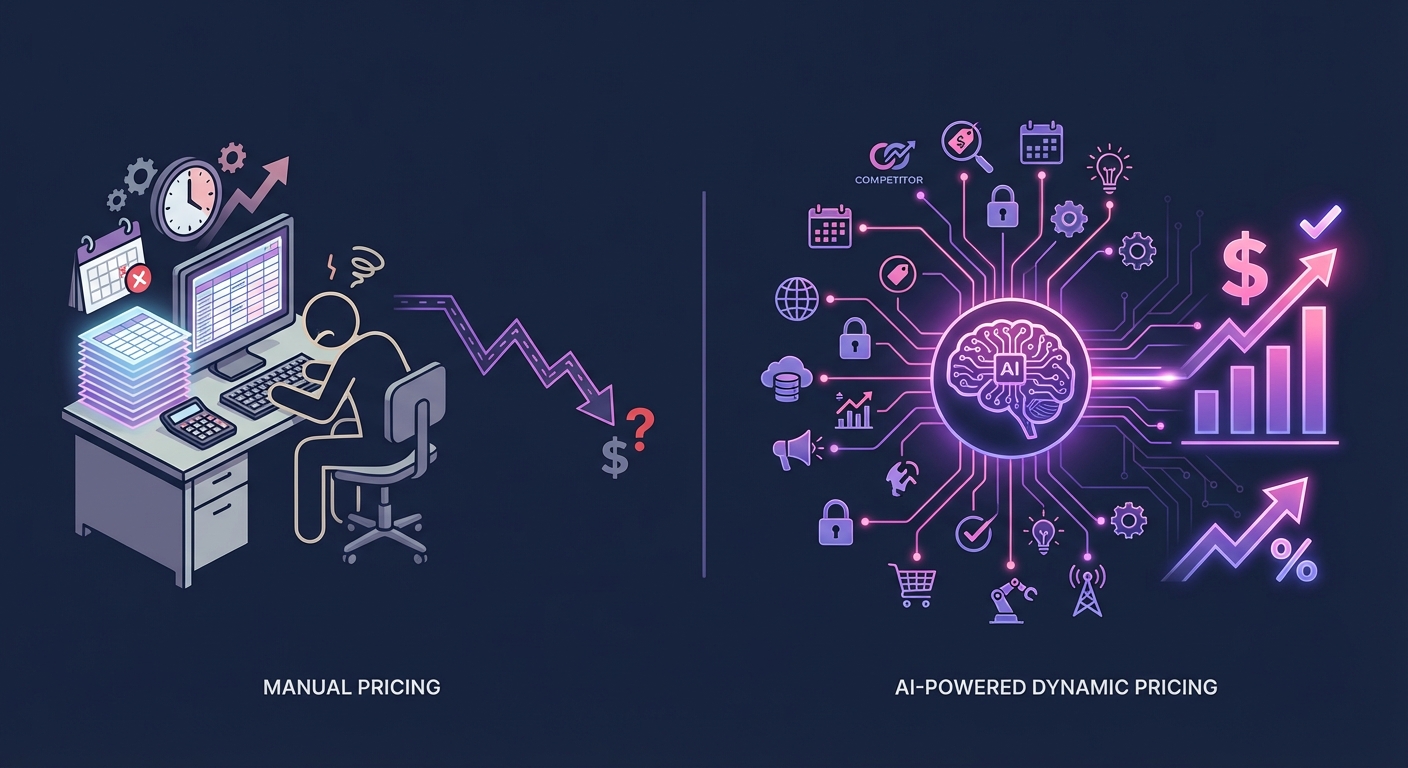
Pricing in B2B commerce is tricky. You have volume discounts, contract prices, seasonal changes, and competitor movements. I met Sarah, who runs a plumbing supplies business. She was manually updating prices in spreadsheets every week. By Friday, her prices were already outdated.
We implemented AI-powered dynamic pricing that considers 15 different factors. It looks at competitor prices, inventory levels, customer purchase history, market demand, and even shipping costs. Sarah's gross profit increased by 18% in the first quarter. That translated to an extra $340,000 annually on their $5 million revenue.
The AI doesn't just raise prices either. Sometimes it lowers them strategically to move slow inventory or win back dormant customers. One client cleared out $200,000 in stagnant inventory by letting AI adjust prices based on shelf time and market demand.
3.1. Customer-Specific Pricing Intelligence
Not all customers should see the same prices. AI in B2B commerce creates personalized pricing for each account. It considers order frequency, payment terms, order size, and customer lifetime value. Your best customers get rewarded automatically without manual intervention.
I implemented this for an electrical components distributor. Their AI identifies customers likely to churn and offers targeted discounts to keep them. It also spots opportunities to raise prices for less price-sensitive accounts. The result was a 12% increase in average order value.
4. Personalized Customer Experiences That Drive Loyalty
B2B buyers expect the same easy experience they get shopping on Amazon. But your catalog has 10,000 SKUs and complex specifications. I worked with an automotive parts supplier whose customers spent 20 minutes searching for the right part. Many gave up and called competitors.
We added AI-powered search that understands natural language. Buyers can type "brake pads for 2018 Ford F-150" and instantly see compatible options. The AI also suggests related items like brake fluid and rotors. Their cart abandonment dropped by 35%, and average order value increased by $127.
AI in B2B commerce also remembers what each customer usually orders. A restaurant supply company I helped uses AI to create personalized dashboards. When buyers log in, they see their frequently ordered items, seasonal suggestions, and reorder reminders based on their typical consumption patterns.
4.1. Predictive Recommendations That Actually Work
Generic product recommendations annoy B2B buyers. AI needs to understand their business context. I configured an AI system for a construction materials supplier that considers project timelines, weather forecasts, and regional building codes. It suggests products customers actually need, not just what sells well generally.
This intelligent recommendation engine increased cross-selling by 28%. Customers appreciate the thoughtful suggestions instead of random products. One contractor told my client, "It feels like you understand my business better than my own team sometimes."
5. AI-Powered Customer Service and Support
Customer service in B2B commerce is expensive. I know a distributor who employed eight people just to answer questions about order status, product specifications, and pricing. Most questions were simple, but they still required human time.
We implemented an AI chatbot that handles 70% of routine inquiries. It checks order status, provides tracking information, answers specification questions, and even processes simple returns. The human team now focuses on complex issues and relationship building. Customer satisfaction scores improved by 22 points.
The AI learns from every interaction. When it can't answer something, it routes to a human and remembers that answer for next time. After six months, the system became incredibly smart about this specific business and its customers.
5.1. Multilingual Support Without Extra Staff
Many B2B businesses sell internationally but lack multilingual support staff. AI translation tools now provide real-time support in 30+ languages. A medical supplies exporter I worked with used AI to support Spanish, Portuguese, and Mandarin-speaking customers without hiring bilingual staff.
Their international sales grew by 43% because buyers felt confident ordering in their native language. The AI doesn't just translate words—it understands business context and technical terminology specific to their industry.
6. Inventory Management and Demand Forecasting
Inventory ties up cash. Too much inventory costs money in storage. Too little inventory loses sales. I helped a hardware distributor who constantly struggled with this balance. Some items gathered dust while others went out of stock weekly.
AI in B2B commerce analyzes historical sales data, seasonal trends, market indicators, and even social media sentiment. It predicts what you'll sell next month with impressive accuracy. My client reduced inventory carrying costs by $180,000 while improving stock availability from 82% to 94%.
The AI also identifies slow-moving inventory early. Instead of discovering dead stock after a year, you know within weeks. You can take action like promotions or bundling before it becomes a major problem.
6.1. Automated Reordering and Supplier Management
AI can automatically generate purchase orders when inventory hits reorder points. It considers supplier lead times, minimum order quantities, and current demand trends. An office supplies distributor I worked with eliminated manual PO creation entirely. Their purchasing team shifted to strategic vendor negotiations instead of administrative tasks.
The system also tracks supplier performance. It monitors delivery times, quality issues, and pricing trends. When a supplier consistently underperforms, the AI flags it for review. This visibility helped my client renegotiate terms with three suppliers, saving $90,000 annually.
7. Sales and Marketing Automation for B2B
B2B sales cycles are long and complex. I worked with an industrial equipment seller whose reps spent hours qualifying leads manually. Most weren't ready to buy, wasting valuable selling time.
We implemented AI lead scoring that analyzes behavior, company size, industry, website activity, and engagement patterns. It ranks leads by purchase likelihood. Sales reps now focus on hot prospects. Their close rate jumped from 12% to 23%, effectively doubling revenue without adding salespeople.
AI in B2B commerce also personalizes email marketing at scale. Instead of generic newsletters, each customer receives content relevant to their industry, purchase history, and browsing behavior. A packaging supplier saw email conversion rates triple after implementing AI-driven personalization.
7.1. Account-Based Marketing Powered by AI
Target account marketing works better with AI insights. The technology identifies which accounts show buying signals and what content resonates. I helped a software company selling to manufacturers. Their AI identified 30 accounts showing strong intent signals. The sales team prioritized these accounts and closed eight deals worth $1.2 million within four months.
AI also optimizes ad spending. It determines which channels and messages work best for different account segments. You stop wasting money on ads that don't convert and double down on what works.
8. Search and Navigation Improvements
B2B catalogs are huge and technical. Buyers struggle finding exactly what they need. I saw this with a hydraulics supplier. Their site had 8,000 products with complex specifications. Customers typed "high pressure hose" and got 400 results. Finding the right one took forever.
AI-powered search understands intent and context. It uses natural language processing to interpret queries and filters results intelligently. We added faceted search with AI suggestions. Search abandonment dropped by 47%. Customers found products 60% faster on average.
The AI also handles misspellings, synonyms, and industry jargon. Whether someone searches for "pneumatic cylinder" or "air cylinder," they get the same relevant results. This flexibility dramatically improves the buying experience.
8.1. Visual Search for Technical Products
Some B2B products are easier to identify visually than by description. AI visual search lets buyers upload a photo of a part they need. The system identifies it and shows matching products. A fastener distributor I worked with added this feature. Customers love it for finding replacement parts when they only have the old part but no part number.
The technology improved their quote request volume by 29%. Buyers who previously gave up now successfully find what they need and place orders.
9. Analytics and Business Intelligence
Data without insights is worthless. Most B2B businesses collect tons of data but struggle to use it. I met Tom, who had three years of sales data in spreadsheets. He knew there were insights there but didn't have time to dig through it all.
AI analytics tools find patterns humans miss. They identify your most profitable customer segments, best-selling product combinations, and optimal pricing strategies. Tom's AI dashboard showed him that 18% of his customers generated 67% of his profit. He could then focus retention efforts where they mattered most.
AI in B2B commerce also predicts future trends. One client's AI forecasted a 30% demand increase for a specific product category three months before it happened. They stocked up early, captured market share, and made an extra $400,000 while competitors ran out of stock.
9.1. Real-Time Dashboards and Alerts
AI monitors your business 24/7 and alerts you to important changes. Sudden drop in conversion rates? AI flags it. Competitor changed prices? You know immediately. Key customer reducing order frequency? System sends an alert.
I set up real-time monitoring for a chemicals distributor. The AI caught a website error that was blocking checkout. They fixed it within an hour instead of discovering it days later. That quick response saved an estimated $15,000 in lost sales.
10. Implementation Challenges and How to Overcome Them
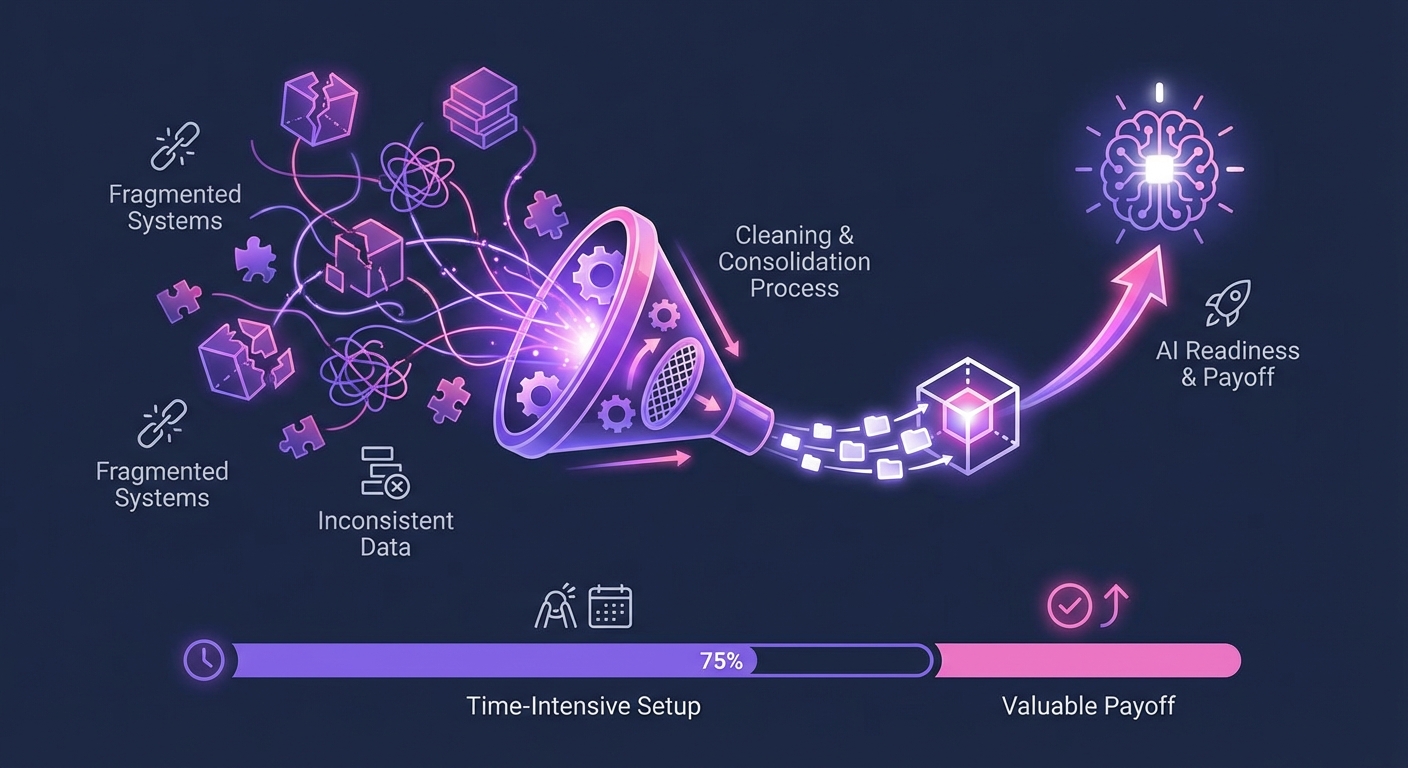
Implementing AI isn't always smooth. I've seen common obstacles that slow down adoption. The biggest one is data quality. AI needs clean, organized data to work well. One client had customer information spread across four systems with inconsistencies everywhere.
We spent six weeks cleaning and consolidating their data before implementing AI tools. It felt slow, but the payoff was worth it. Their AI worked beautifully because it had good data to learn from. Skipping this step leads to poor results and frustration.
Another challenge is team resistance. People fear AI will replace them. I always bring the team into the process early. I show them how AI handles boring tasks so they can do more interesting work. When they see AI as a helpful tool rather than a threat, adoption goes smoothly.
10.1. Starting Small and Scaling Up
Don't try implementing everything at once. I recommend starting with one high-impact area. Maybe it's automated order processing or dynamic pricing. Get that working well, show ROI, then expand.
A packaging materials company I worked with started with just AI-powered product recommendations. It was relatively simple to implement and showed quick results. Once leadership saw the 15% increase in average order value, they enthusiastically funded expansion to other areas.
11. Future Trends in AI for B2B Commerce
AI in B2B commerce keeps getting smarter. Autonomous agents that handle entire workflows without human intervention are emerging. Imagine an AI that notices a customer's order pattern changed, proactively reaches out, discovers they're expanding operations, and suggests bulk purchasing terms automatically.
I'm also seeing generative AI create personalized catalogs for each buyer. Instead of one catalog with 10,000 products, each customer sees a curated selection of items relevant to their business. This makes shopping faster and more efficient.
Voice commerce is coming to B2B too. Procurement managers will simply speak orders into their phones. "Order 500 units of part XYZ-123 at the contract price, ship to warehouse B." The AI processes it instantly. This convenience will become standard within a few years.
11.1. AI Copilots for Sales Teams
Sales copilots are the hottest new trend. These AI assistants sit alongside your sales reps, suggesting what to say, which products to recommend, and when to follow up. They analyze call transcripts in real-time and provide coaching.
I recently tested a copilot system with a client's sales team. New reps became productive 40% faster. Experienced reps closed deals 18% quicker. The AI didn't replace the human touch—it enhanced it with data-driven insights.
12. Choosing the Right AI Tools for Your Business
The AI market is crowded and confusing. I evaluate dozens of tools regularly. For B2B businesses making $1-10 million annually, I recommend starting with platforms that integrate with your existing systems. Don't rip everything out and start over.
Look for tools with proven ROI in your industry. A great AI tool for fashion won't work the same for industrial supplies. Ask vendors for case studies from similar businesses. Request trial periods to test before committing to long contracts.
AI in B2B commerce works best when tools work together. Your pricing AI should talk to your inventory AI. Your customer service AI needs access to order data. Choose platforms with open APIs that connect easily.
12.1. Build vs. Buy Decision
Some businesses wonder if they should build custom AI solutions. Unless you have a full development team and unique requirements, buying existing tools makes more sense. I've seen companies waste $200,000 building custom AI when a $2,000/month platform would have worked perfectly.
That said, customization matters. Choose tools flexible enough to match your workflows. Off-the-shelf solutions are fine if vendors allow configuration to your specific needs.
13. Measuring ROI from AI Investments
How do you know if AI is worth the cost? I track specific metrics with every client. Start with clear baselines before implementing AI. Measure order processing time, customer acquisition cost, average order value, gross margin, and customer lifetime value.
After implementation, track these same metrics monthly. A lighting distributor I worked with saw these results after six months: order processing time down 64%, customer service costs down 31%, average order value up 19%, and gross margin up 8%. They invested $45,000 in AI tools and saved $280,000 annually.
Don't expect instant miracles. AI improves over time as it learns from your data. The first month might show modest improvements. By month six, results typically accelerate. Give it time to prove value before judging success or failure.
13.1. Hidden Cost Savings
Direct savings are easy to measure. Hidden savings matter too. AI reduces employee burnout by handling repetitive tasks. Lower turnover saves recruiting and training costs. Better customer experience reduces price-shopping and increases loyalty. These benefits don't show up in immediate ROI calculations but add substantial value.
One client didn't realize how much time their team spent answering the same questions repeatedly. After implementing an AI knowledge base and chatbot, employee satisfaction scores jumped. Two key employees who were planning to leave stayed because their jobs became more interesting.
14. Security and Compliance Considerations
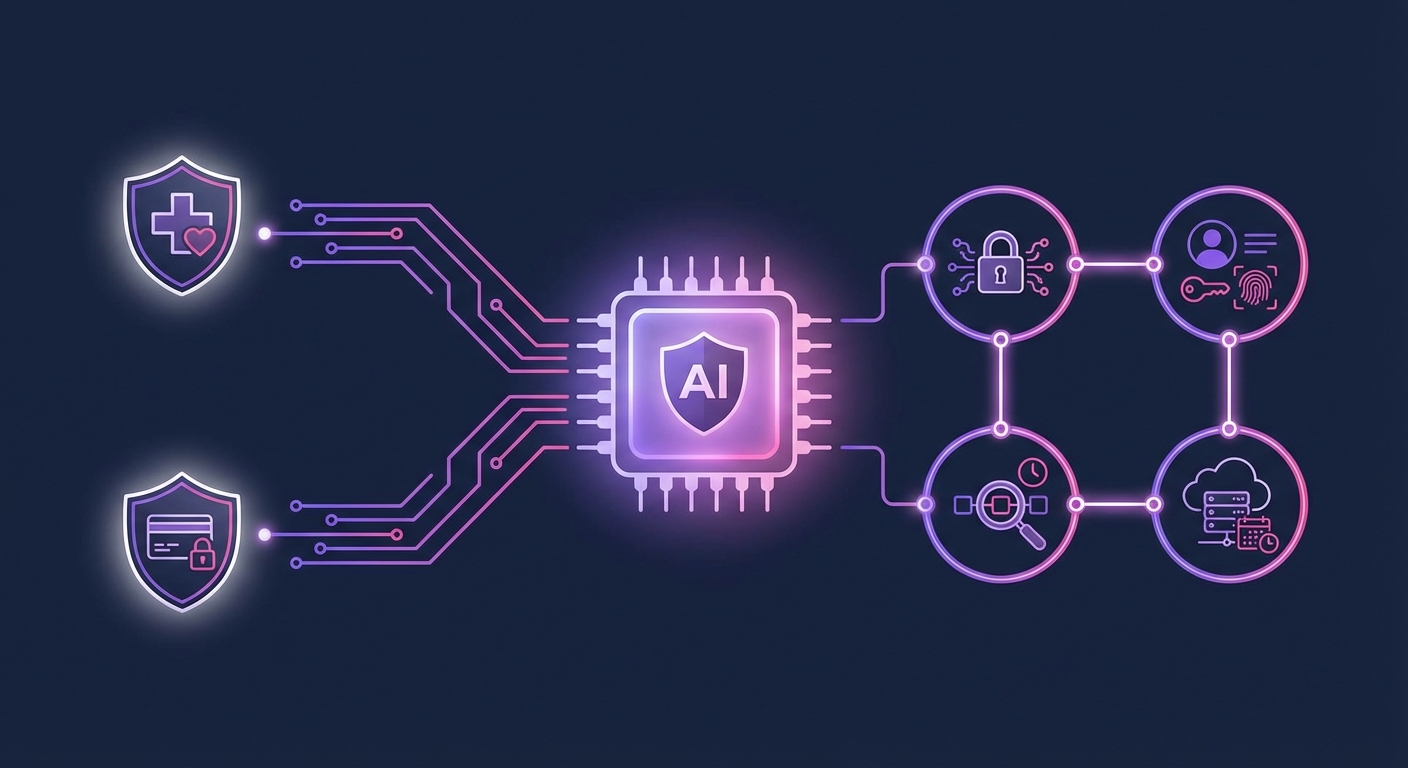
AI handles sensitive business data. Security can't be an afterthought. I always ensure AI tools meet industry compliance standards. For healthcare clients, that's HIPAA. For financial services, it's PCI DSS. Know what regulations apply to your industry.
Ask vendors about data encryption, access controls, and audit trails. Where is your data stored? Who can access it? How long is it retained? These questions sound boring but matter enormously. One client almost chose an AI vendor until we discovered data was stored on servers in a country with weak privacy laws.
AI in B2B commerce also requires governance policies. Who approves AI-generated pricing decisions? How do you handle AI errors? What's the escalation process when AI can't resolve a customer issue? Document these processes before problems arise.
14.1. Ethical AI Usage
AI can perpetuate biases if not carefully managed. Pricing algorithms might inadvertently discriminate. Recommendation engines could favor certain suppliers unfairly. I help clients audit their AI systems regularly to catch these issues.
Transparency matters too. Customers should know when they're interacting with AI versus humans. Most people don't mind AI assistance if you're upfront about it. Trying to hide it damages trust when they eventually discover it.
FAQ: Your Questions About AI in B2B Commerce Answered
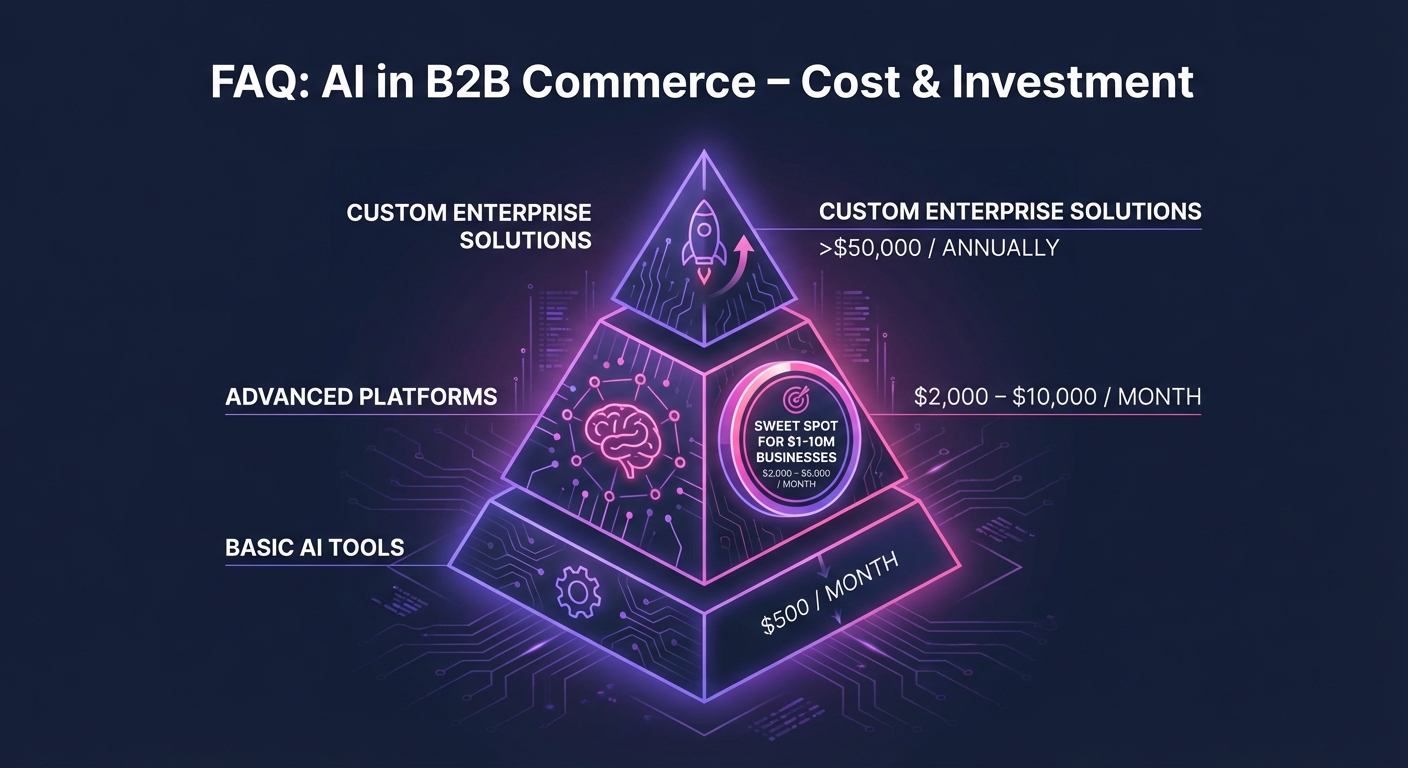
How much does AI for B2B commerce cost?
Basic AI tools start around $500 per month. More advanced platforms range from $2,000 to $10,000 monthly depending on features and business size. Custom enterprise solutions can exceed $50,000 annually. Most businesses making $1-10 million annually find sweet spots between $2,000-$5,000 monthly for comprehensive AI capabilities.
Will AI replace my sales and customer service teams?
No. AI in B2B commerce assists teams rather than replacing them. It handles repetitive tasks so humans can focus on relationship building and complex problem solving. Most companies actually improve team satisfaction because employees do more meaningful work. Think of AI as giving your team superpowers, not taking their jobs.
How long does it take to implement AI in B2B commerce?
Simple tools like chatbots can launch in weeks. Comprehensive AI systems typically take two to four months. Data preparation often takes longest. Clean, organized data makes everything faster. I recommend starting with one area, proving value, then expanding. This phased approach shows results quickly while building momentum.
Do I need technical expertise to use AI commerce tools?
Most modern AI platforms are user-friendly and don't require coding skills. You'll need someone comfortable with software and data, but not a programmer. Many vendors offer implementation support and training. I help non-technical business owners implement AI successfully all the time. If you can use Excel, you can manage AI tools.
What data does AI need to work effectively?
AI needs historical sales data, customer information, product catalogs, pricing history, and order details. The more data and longer history, the better AI performs. Even businesses with just one year of clean data can see meaningful results. Start collecting good data now even if you're not ready for AI yet.
Can AI work with my existing ecommerce platform?
Most AI tools integrate with popular B2B platforms like Shopify Plus, BigCommerce, Magento, and custom systems through APIs. Check integration compatibility before purchasing. Good AI vendors provide documentation and support for connecting to your specific platform. Integration complexity varies but is usually manageable.
How do I know if AI is giving accurate recommendations?
Monitor AI suggestions closely during the first few months. Compare AI recommendations against human expert decisions. Track outcomes when customers follow AI suggestions. Most platforms include confidence scores showing how certain the AI is about recommendations. Start with AI suggesting and humans approving before allowing full automation.
What happens when AI makes a mistake?
AI isn't perfect and will occasionally error. Build safeguards like price limits, manual review for large orders, and easy override options. Log all AI decisions so you can review and improve. The good news is AI learns from mistakes. Each error makes the system smarter if you provide feedback on what went wrong.
Is my business too small for AI?
If you're making over $1 million annually, AI can provide value. Smaller businesses benefit from focused tools like automated email marketing or simple chatbots. You don't need enterprise solutions. Start small with affordable tools that address your biggest pain point. Many AI vendors offer tiered pricing for different business sizes.
How does AI handle complex B2B pricing with contracts and custom quotes?
Advanced AI systems learn your pricing rules and contract terms. They can apply customer-specific pricing, volume discounts, and contract rates automatically. For truly complex quotes, AI can draft initial proposals for human review. The AI becomes smarter as it processes more quotes and learns from your approvals and adjustments.
Key Takeaways
AI in B2B commerce delivers measurable ROI: Businesses typically see 15-30% profit margin improvements within six months. Order processing times drop by 50-70%, and customer satisfaction rises 20-40 points. Start with one high-impact area like pricing or order automation to prove value quickly.
Implementation requires clean data and team buy-in: Spend time organizing your data before launching AI tools. Include your team early in the process to reduce resistance. Most failures happen because of poor data quality or lack of adoption, not because the technology doesn't work.
Start small and scale strategically: Don't try implementing everything at once. Choose one pain point, solve it with AI, measure results, then expand. This approach shows quick wins that build momentum and secure budget for broader implementation.
AI enhances humans rather than replacing them: Your team becomes more effective when AI handles repetitive tasks. Sales reps focus on relationships, customer service solves complex problems, and managers make strategic decisions. Everyone does more meaningful work, leading to better retention and satisfaction.
Choose tools that integrate with your existing systems: Look for AI platforms with proven success in your industry and strong integration capabilities. Avoid ripping out working systems. The best AI solutions enhance what you already have rather than requiring complete rebuilds. Consider our AI ecommerce tools that integrate seamlessly with major B2B platforms.
Summary
AI in B2B commerce transforms how mid-size businesses operate, creating significant competitive advantages through automation, personalization, and intelligent decision-making. From order processing to dynamic pricing, customer service to inventory management, AI tools deliver measurable improvements in efficiency and profitability. Businesses making $1-10 million annually are the sweet spot—large enough to benefit from AI but small enough to implement quickly without massive enterprise complexity.
Success requires starting with clean data and choosing the right tools for your specific needs. Don't try to boil the ocean. Pick one high-impact area like automated pricing or order processing, implement it well, measure results, then expand. Most of my clients see positive ROI within three to six months when they follow this focused approach.
The future of B2B commerce is AI-assisted, not AI-replaced. Your team becomes more productive and satisfied when freed from repetitive tasks. Customers get faster, more accurate service. You make better decisions backed by data insights. The technology continues improving rapidly, making this the perfect time to start your AI journey.
I've helped dozens of businesses like yours implement AI successfully. The transformation is real, achievable, and worth the investment. Whether you need help selecting tools, implementing systems, or optimizing existing AI, our team specializes in practical AI solutions that boost B2B commerce profits. Don't let competitors gain this advantage while you wait.
Start exploring AI options today. The learning curve is gentler than you think, the tools are more affordable than ever, and the results speak for themselves. Your business deserves the efficiency, insights, and growth that AI in B2B commerce delivers.
Disclaimer
This article provides general information about AI in B2B commerce and should not be considered professional advice for your specific situation. Results mentioned are based on real client experiences but individual outcomes vary depending on business model, implementation quality, and market conditions. Always conduct thorough research and consider consulting with AI implementation specialists before making significant technology investments. The tools and strategies discussed may not be suitable for every business. Evaluate your specific needs, budget, and technical capabilities before proceeding with AI implementation.